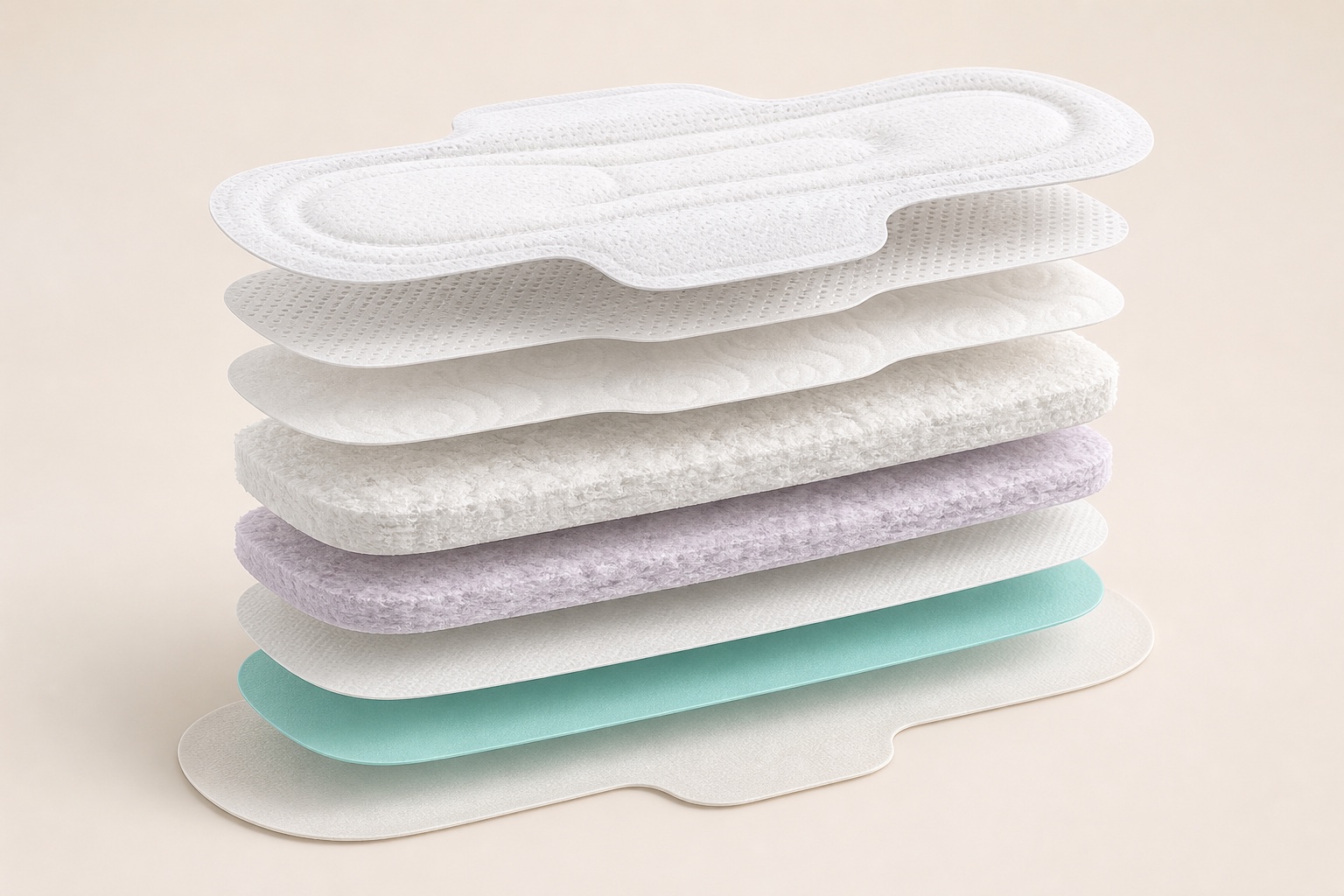
A modern sanitary pad uses multiple layers because no single material can provide softness, fluid transfer, absorption, shape and leak protection at the same time. Lady Anion describes its Far-IR pads as an eight-layer design. The practical value of that design is how the layers work together during normal wear.
From surface to backing
Layer names vary between manufacturers, and some products divide one function across several sheets. A layered pad commonly includes the following functional groups.
1. Soft surface layer
The topsheet is the part that touches the vulva. Its job is to feel comfortable and allow menstrual fluid to move into the pad. A good surface should not feel rough, sticky or heavily perfumed.
2. Fluid transfer and distribution layers
Thin layers under the surface help move fluid away from the point where it lands. Better distribution allows more of the absorbent core to be used and can reduce local wetness.
3. Absorbent core
The core may combine cellulose fibres with superabsorbent material. Cellulose helps draw in and spread fluid, while superabsorbent material can hold fluid in a gel-like form. The amount and arrangement influence thickness, flexibility and capacity.
4. Supporting and specialty layers
Additional sheets may stabilise the core, help the pad keep its shape or carry a specialty material. Lady Anion identifies a Far-IR and anion component within its design. Added materials should be treated as product features unless there is direct clinical evidence for a health claim.
5. Leak-resistant backsheet
The backsheet helps stop liquid reaching underwear. It must provide a dependable barrier while remaining flexible enough to move with the body.
6. Adhesive and release paper
Adhesive secures the pad to underwear. Release paper protects the adhesive before use and is removed when the pad is applied. Wings may have separate adhesive strips.
What an eight-layer design does not prove
More layers do not automatically mean better performance. Thickness, material quality and the way layers are bonded are just as important. An eight-layer description also does not prove that a pad prevents infection, changes vaginal pH or provides therapeutic FIR effects.
How to assess the finished pad
- Does it absorb at a useful rate for your flow?
- Does the surface remain comfortable between changes?
- Does it stay in place without bunching?
- Does the length provide coverage where you need it?
- Can you find clear material, size and use information?
Use the instructions on the current package as the authoritative guide, since product specifications can change. Browse Lady Anion pads to compare current sizes and intended uses.
This article provides general product information and does not make therapeutic claims.