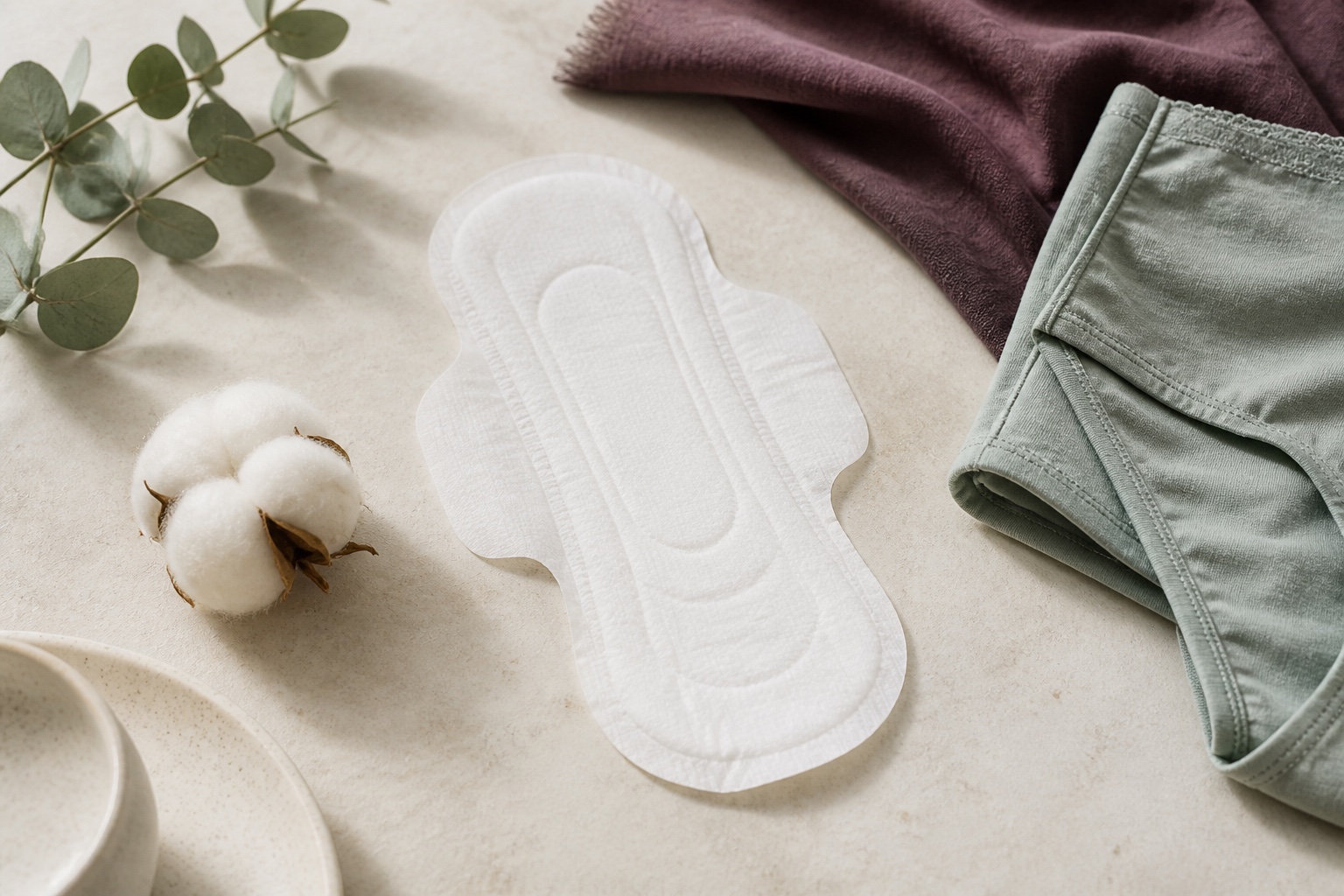
A quality sanitary pad should feel comfortable, stay securely in place and provide enough absorbency for your flow. Marketing terms can be useful starting points, but the best pad is the one that performs reliably for your body, clothing and daily routine.
1. Match absorbency to your flow
Choose the lightest absorbency that keeps you comfortable without leaking. A lighter or shorter pad may suit the beginning or end of a period, while a longer pad can provide more coverage on heavier days or overnight.
Absorbency labels are not standardised across every brand, so it may take a little trial and error. If a pad fills quickly, leaks at the front or back, or needs changing every 1 to 2 hours, consider a higher-absorbency option and speak with a health professional about possible heavy menstrual bleeding.
2. Look for a soft, comfortable surface
The topsheet sits against the vulva, so it should feel smooth and non-abrasive. Cotton and cotton-feel surfaces can both be comfortable, but no single material suits everyone. If you are sensitive to fragrances, dyes or particular adhesives, an unscented product with a simple material list may be easier on your skin.
3. Check fit, length and adhesive
A pad should cover the area where your flow naturally lands without bunching or shifting. Wings can help anchor a pad around the gusset of your underwear. The adhesive should hold during normal movement but release without leaving excessive residue.
- For work or school: choose dependable coverage that fits comfortably under your usual clothing.
- For exercise: look for a secure fit and flexible construction.
- For overnight: consider extra length at the back and enough absorbency for your flow.
4. Prioritise dryness and regular changes
A well-designed absorbent core draws fluid away from the surface and distributes it through the pad. No pad should be expected to last all day. Healthdirect advises changing a pad about every 4 hours, or sooner when it is full. Wash your hands before and after changing, wrap the used pad and place it in a bin rather than flushing it.
5. Consider packaging and environmental impact
Individual wrappers help keep spare pads clean in a bag and provide a convenient way to wrap a used pad. Environmental considerations may include the amount of packaging, certified fibres, manufacturing information and disposal guidance. Terms such as natural, organic and biodegradable should be supported by clear product information rather than assumed from the front of the pack.
A practical quality checklist
- Enough absorbency for your current flow
- A soft surface with no unwanted fragrance
- Length and width that match your body and underwear
- Adhesive and wings that prevent shifting
- Clear material, sizing and disposal information
- Comfort after several hours of normal movement
Lady Anion offers a range of period pads designed around absorbency, coverage and everyday comfort. Whatever product you choose, change it regularly and stop using it if you notice persistent irritation.
This article provides general information and is not a substitute for individual medical advice.